As organisations increasingly adopt digital workflows, physical books and printed documents continue to hold significant value. Training manuals, archived reports, technical references, and internal documentation often remain relevant for years — yet they become harder to access, update, and preserve over time.
This book scanning guide is designed to help organisations understand when scanning makes sense, when reprinting is the better option, and how to preserve content without losing control of the original material. Rather than treating scanning as a purely technical task, this guide frames it as part of a broader content and printing strategy.
Table of Contents
What is Book Scanning?
Why Book Scanning is Still a Practical Solution?
Common Reasons Organisations Use Book Scanning
Digital Archiving and Preservation
Accessibility and Knowledge Sharing
Updating and Reprinting Content
Scan vs Reprint: Which Option Makes More Sense?
When Scanning is the Better Choice When Reprinting Makes More Sense
How Book Scanning Protects Original Materials
Types of Books Commonly Scanned
What Happens after a Book is Scanned?
Professional Support vs DIY Scanning
What is Book Scanning?
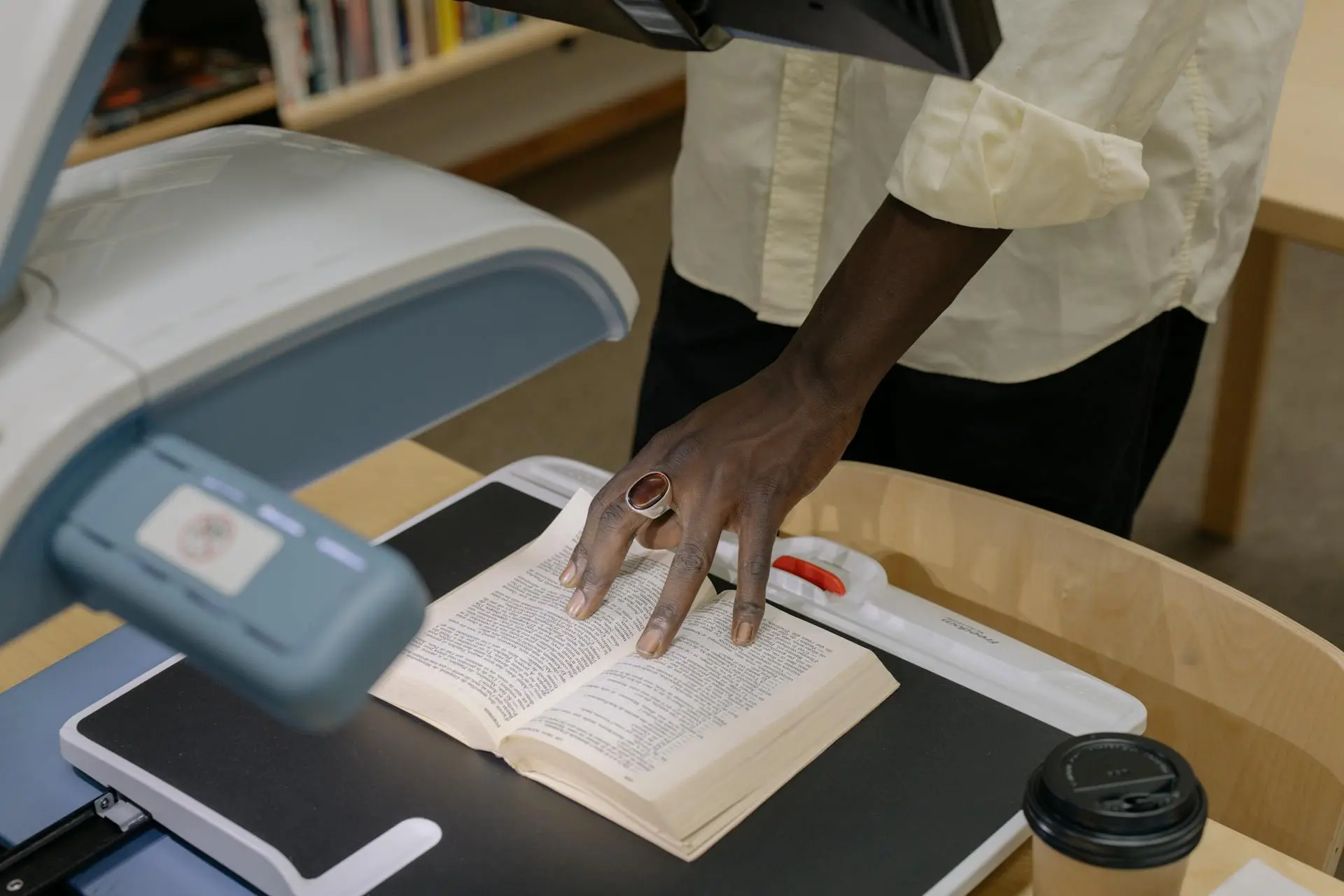
Book scanning is the process of converting physical books into high-quality digital files—typically PDFs or images—while preserving content accuracy, layout, and readability.
Unlike casual scanning using office devices, proper book scanning accounts for:
Bound spines
Page curvature
Text clarity near margins
Consistent alignment across hundreds of pages
For organisations managing manuals, archived reports, or reference materials, scanning provides a way to retain valuable content without being tied to physical storage.
If you’re new to print-related decisions, many foundational considerations—such as quantity, material handling, and output quality—overlap with printing workflows and are explained in this affordable book printing guide for Singapore businesses, which helps frame cost and quality trade-offs early.
Why Book Scanning is Still a Practical Solution?
Book scanning is no longer just about digitisation—it plays a strategic role in how information is accessed, shared, and updated.
As organisations move toward:
Remote work
Centralised knowledge systems
Reduced physical storage
Scanning allows printed materials to remain useful rather than obsolete.
When paired thoughtfully with reprinting or redesign, scanning helps extend the lifespan of existing content instead of starting from scratch. This decision-making process mirrors how businesses evaluate print options in this guide on choosing the right book printing services, where intent and usage matter more than format alone.
Additionally, when careful handling, accuracy, and output quality matter, working with an experienced scanning partner ensures bound materials are digitised responsibly and prepared for future use. Explore Print Print’s book scanning services to understand how different book types are handled and which scanning approach best suits your needs.
Common Reasons Organisations Use Book Scanning
1) Digital Archiving & Preservation
Books that are:
Out of print
Ageing
Rare or annotated
are often scanned to ensure their content remains accessible even if the physical copy deteriorates.
2) Accessibility & Sharing
Digitised books can be:
Shared internally
Accessed remotely
Indexed for faster reference
This is especially useful for training manuals or technical documentation.
3) Preparing for Reprinting
Many clients scan books so they can:
Update outdated content
Redesign layouts
Reprint using modern formats
In these cases, scanning becomes the first step in a broader book printing workflow, rather than a standalone task.
Scan vs Reprint: Which Option Makes More Sense?
This is one of the most common questions addressed in any book scanning guide, and the answer depends on intent.
When Scanning Is the Better Choice
Scanning makes sense when:
The book is irreplaceable or out of print
You need digital access, not new copies
Content is still accurate
Preservation outweighs presentation
When Reprinting Is the Better Option
Reprinting is more suitable if:
Content requires updates
The original book is worn or outdated
Multiple new copies are needed
Visual quality matters
In many real-world cases, organisations scan first, then reprint selectively, applying principles similar to those explained in this comparison of short-run vs bulk book printing, where volume and purpose determine the most efficient path.
How Books Are Scanned Without Damaging Them
One concern often raised in any book scanning discussion is whether original books will be damaged.
A careful scanning process focuses on:
Controlled page handling
Minimal spine stress
Accurate colour and text capture
Depending on the project, scanning may be:
Non-destructive (book remains intact)
Semi-destructive (spine removed for cleaner scans)
The right approach depends on the book’s condition, binding type, and what you plan to do with the scanned files afterward.
What Happens After a Book Is Scanned?
Scanning is rarely the final step.
Common next stages include:
OCR for searchable text
Content editing or updates
Layout redesign
Reprinting using suitable binding methods
This is where scanning naturally intersects with book printing services, allowing content to move seamlessly from physical → digital → physical again in a more refined format.
Many of the cost and planning considerations for this transition are covered in this affordable book printing guide, which explains how decisions made early affect final output.
Professional Support vs DIY Scanning
While office scanners work for loose pages, they struggle with bound books.
Limitations of DIY Scanning
Curved text near the spine
Inconsistent alignment
Slow turnaround
Higher risk of damage
Conversely, professional setups are designed specifically for:
Bound materials
High page counts
Quality-sensitive documents
This distinction will be explored further in a future in-depth piece comparing DIY book scanning vs professional scanning, which builds naturally from this guide.
A Practical Approach to Book Scanning and Printing
At Print Print, scanning is treated as part of a broader content lifecycle, not just a technical process.
Clients are guided on:
Whether scanning alone is sufficient
When reprinting adds more value
How redesign and binding choices affect usability
When careful handling, accuracy, and output quality matter, working with our experienced book scanning service ensures materials are digitised responsibly and prepared for future use.
For projects that extend beyond scanning, you can also explore our custom printing services in Singapore to see how digitised content can be transformed into updated print materials.
To understand how we have approached similar projects, you may also browse our portfolio, which highlight real-world outcomes across scanning and printing workflows.
Final Thoughts: Preserve Knowledge Without Starting Over
Books often hold value far beyond their covers. Whether it’s institutional knowledge, training content, or archived material, scanning allows information to remain accessible, adaptable, and future-ready.
When combined thoughtfully with modern printing options, scanning helps organisations preserve what matters—without unnecessary rework or loss.
Need to digitise books safely or prepare them for reprinting?
You can always contact us to discuss your requirements and explore suitable options.
 Big Thinkers Business | 05 Jan 2026