

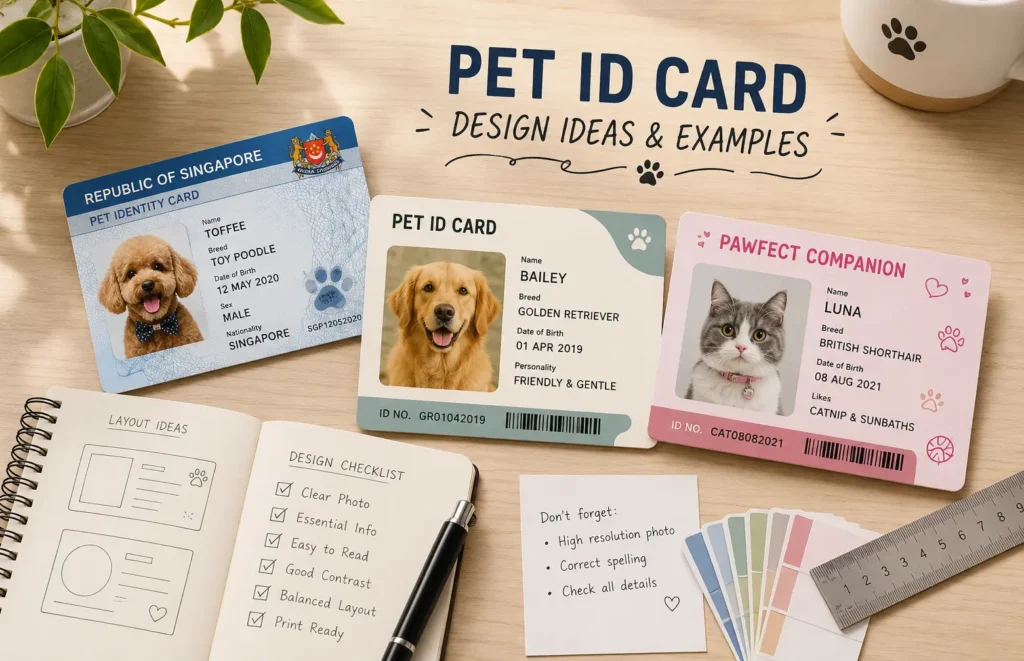
A well-designed pet ID card is more than a collection of information. The layout, imagery, colours, and spacing all contribute to how the final product looks and feels.
Through our pet ID card printing service, pet owners can create personalised cards that combine professional printing with thoughtful design. Whether you are creating a gift, keepsake, or memorial item, good design choices can significantly improve the final result.
This guide explores practical pet ID card design ideas, common layout approaches, and the factors that influence print quality.
Table of Contents
- What Makes a Good Pet ID Card Design?
- Information to Include on a Pet ID Card
- Popular Pet ID Card Design Styles
- Choosing the Right Photo
- Common Pet ID Card Design Mistakes
- Design Considerations for Different Purposes
- Preparing Your Design for Printing
- Bringing Your Pet ID Card Design to Life
- Final Thoughts
What Makes a Good Pet ID Card Design?
A successful pet ID card design balances aesthetics with functionality.
While it can be tempting to include numerous graphics, colours, and decorative elements, the most effective designs typically focus on clarity and structure.
A well-designed card usually prioritises:
- Clear information hierarchy
- Balanced spacing
- Consistent typography
- Appropriate image placement
- Visual simplicity
These principles help ensure the card remains visually appealing while still presenting information clearly.
For a broader overview of how personalised pet id cards are commonly used, you may also explore our introductory guide on pet ID cards as personalised keepsakes.
Information to Include on a Pet ID Card
One of the first design decisions involves determining which information should appear on the card.
Common elements include:
Essential Details
- Pet name
- Breed
- Date of birth
- Gender
Optional Details
- Personality traits
- Favourite activities
- Owner message
- Fun facts
- Adoption date
Visual Elements
- Pet photograph
- Icons
- Decorative graphics
- Background patterns
The most effective designs avoid overcrowding by prioritising information that supports the card’s intended purpose.
In many cases, less information creates a cleaner and more professional appearance.
Popular Pet ID Card Design Styles
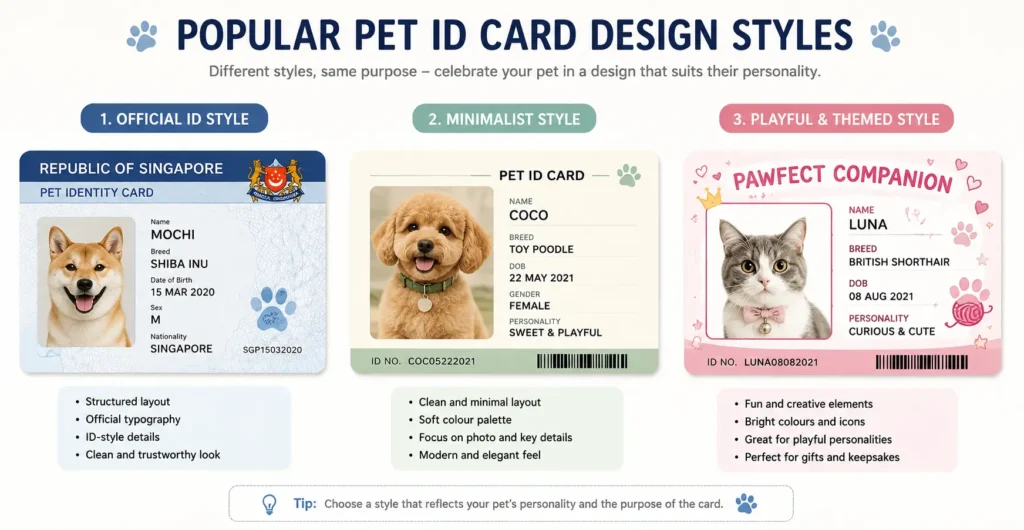
One of the biggest advantages of a personalised pet ID card is the ability to customise its appearance.
Several design styles have become particularly popular.
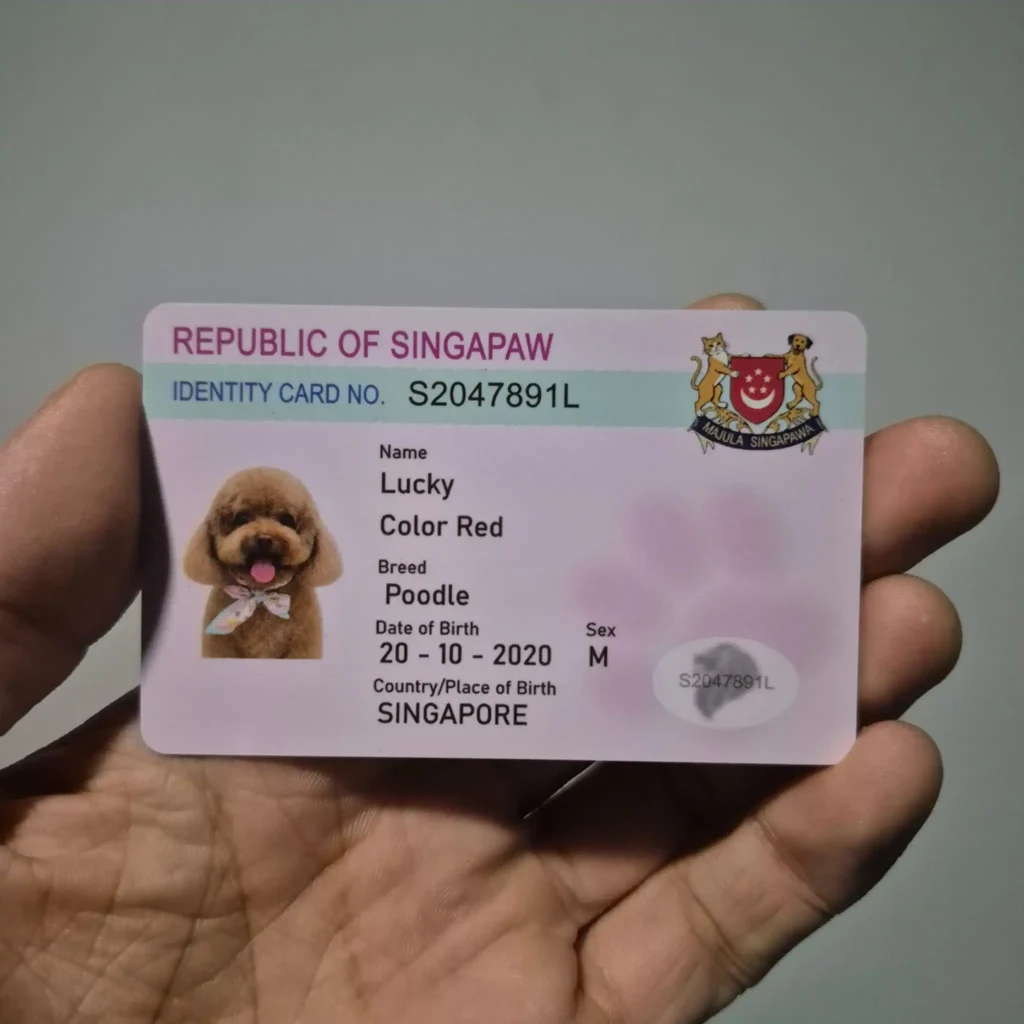
Official Identification Style
This approach mimics traditional identity cards and often includes:
- Structured layouts
- Formal typography
- Identification-style numbering
- Government-inspired formatting
This remains one of the most requested formats because it combines novelty with familiarity.
Minimalist Style
Minimalist designs focus on:
- Clean layouts
- Ample white space
- Limited colour palettes
- Strong image emphasis
These designs often feel modern and timeless.
Playful and Themed Designs
Many owners prefer designs that reflect their pet’s personality.
Examples include:
- Cartoon themes
- Passport-inspired designs
- Travel themes
- Pop culture references
- Holiday-inspired layouts
Memorial Designs
Memorial-focused cards typically adopt a more restrained visual approach.
These often feature:
- Softer colours
- Simplified layouts
- Meaningful photographs
- Personal messages
If you are creating a remembrance piece, our guide on pet ID card printing for memorial pets discusses additional considerations for memorial-focused designs.
Choosing the Right Photo
Even the best layout cannot compensate for a poor-quality image.
The photograph often becomes the focal point of the entire design, making image selection one of the most important decisions.
When choosing a photo, consider:
Resolution
Higher-resolution photographs generally produce:
- Better sharpness
- Improved colour accuracy
- More professional print results
Lighting
Natural lighting often provides:
- Better colour representation
- Improved detail visibility
- More flattering images
Framing and Cropping
A tightly cropped image typically works better than photographs with excessive background distractions.
The goal is to ensure the pet remains the primary visual focus.
Expression and Personality
Many owners choose photographs that reflect:
- Playfulness
- Curiosity
- Calmness
- Distinct personality traits
This helps create a stronger emotional connection with the finished card.
Common Pet ID Card Design Mistakes
Many design issues can be avoided with careful planning.
Including Too Much Information
Attempting to include excessive details often creates visual clutter.
Using Low-Resolution Images
Poor image quality becomes much more noticeable after printing.
Overusing Decorative Elements
Icons, graphics, and backgrounds should support the design rather than compete with important information.
Poor Spacing
Even high-quality designs can appear unprofessional when spacing is inconsistent.
Ignoring Print Considerations
A design that looks good on screen may not always translate effectively into print.
This is why layout review remains an important part of the production process.
Design Considerations for Different Purposes
Different goals often require different design approaches.
Personalised Gifts
Gift-focused designs tend to be:
- Playful
- Colourful
- Highly customised
Display Pieces
Cards intended for display often prioritise:
- Visual appeal
- Simplicity
- High-quality imagery
Memorial Keepsakes
Memorial cards typically focus on:
- Emotional significance
- Clean layouts
- Meaningful photographs
Collectible Items
Some owners create cards as part of larger collections or scrapbooks.
These often benefit from consistent formatting and design standards.
For those deciding between different keepsake formats, our comparison article of pet ID cards vs photo books may also help clarify which format best aligns with your goals.
Preparing Your Design for Printing
Good design decisions should be supported by equally good production decisions.
Before printing, it is worth reviewing:
Image Quality
Ensure photographs remain sharp at print size.
Layout Alignment
Check spacing, margins, and positioning.
Colour Selection
Colours may appear slightly different in print compared to digital screens.
Material Selection
The material influences:
- Durability
- Surface appearance
- Long-term performance
Future articles in our series will explore pet ID card materials and durability in greater detail.
For those interested in preserving a larger collection of photographs and memories, our guide on printing a personalised photo book provides additional insights into long-form memory preservation.
Bringing Your Pet ID Card Design to Life
At Print Print, we help customers transform pet photographs and ideas into professionally printed cards through our custom printing services in Singapore.
Whether you already have a completed layout or need guidance on design choices, our team can advise on:
- Layout optimisation
- Photo preparation
- Material selection
- Printing specifications
- Finishing options
By combining thoughtful design with professional production, it becomes much easier to create a card that remains visually appealing and durable over time.
You may also explore our pet ID card printing options to learn more about available materials, finishes, and customisation possibilities.
Final Thoughts
A successful pet ID card design is not simply about adding information to a card template. It involves making deliberate choices about layout, imagery, spacing, and visual hierarchy.
By focusing on clarity, balance, and print quality, pet owners can create personalised cards that are both visually appealing and meaningful.
Whether the goal is to create a gift, display piece, collectible item, or memorial keepsake, thoughtful design decisions often have the greatest impact on the final result.
With the right combination of design and production quality, a personalised pet ID card can become a lasting keepsake that celebrates the unique personality of a beloved companion.
Contact Print Print today for a free, no-obligation quotation and let us help you create a personalised pet ID card that looks as good in print as it does on screen.
Related Posts:
- Custom Tote Bag Printing: A Smart Branding Guide for 2025
- Tote Bag Design Guide for Better Print Results
- Tote Bag Material Guide: Choosing the Right Fabric for Printing
