



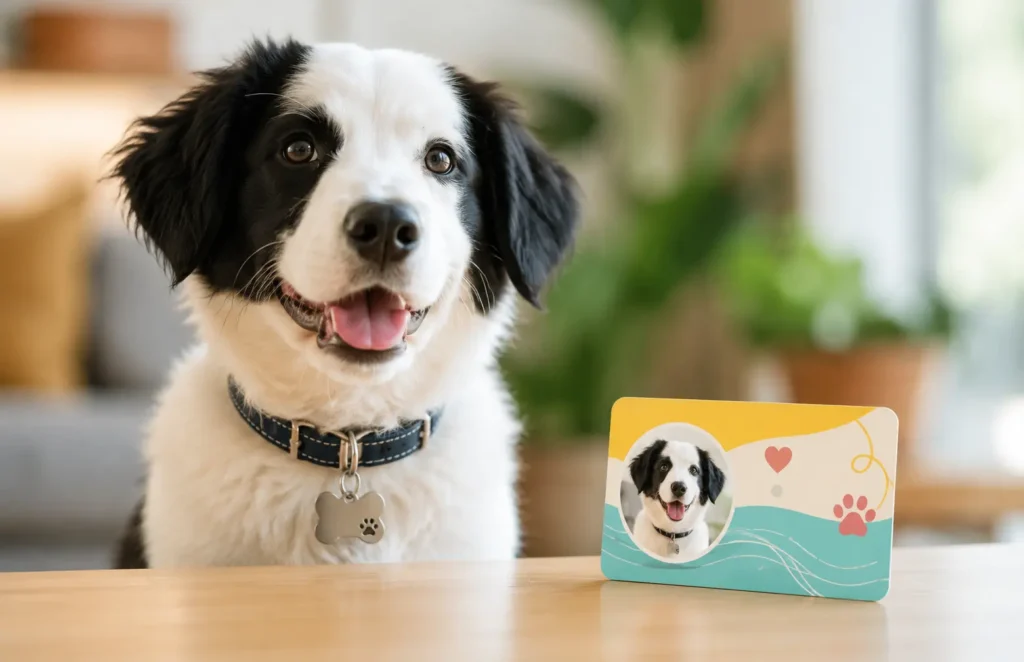
When pet owners search for a pet ID, they often encounter traditional collar tags alongside personalised pet ID cards.
Although the names sound similar, the two products serve very different purposes.
A traditional pet tag is designed for practical identification. It is normally attached to a pet’s collar and contains essential contact information that may help someone reach the owner. A pet ID card, on the other hand, is generally created as a fun and personalised item. It can feature a pet’s photograph, name, characteristics and decorative details in a familiar identity-card format.
Through Print Print’s pet ID card printing service, owners can create custom cards for gifting, collecting, display or memorial purposes. These recreational cards are not intended to replace practical collar identification. Instead, they provide a creative way to celebrate a pet’s identity and personality.
This pet id card vs pet tag guide explains the important differences between both formats and helps owners decide whether they need practical identification, a personalised keepsake or both.
Table of Contents
- What Does Pet ID Mean?
- Pet ID Card vs Pet Tag: The Core Difference
- Quick Comparison: Practical Tag vs Personalised Card
- Why Traditional Pet Tags Remain Useful
- What Makes a Personalised Pet ID Card Different?
- Which Format Offers More Personalisation?
- Comparing Durability and Everyday Use
- When Should You Choose a Traditional Pet Tag?
- When Should You Choose a Personalised Pet ID Card?
- Can Pet Owners Use Both?
- Keeping the Pet ID Card Design Clear and Purposeful
- Final Thoughts
What Does Pet ID Mean?
The term pet ID can refer to several different ways of identifying or representing a pet.
In a practical context, pet identification may include:
- Collar tags
- Contact details attached to the pet
- Registration information
- Microchip records
- Licensing or ownership records
However, pet ID may also describe personalised products inspired by human identification cards.
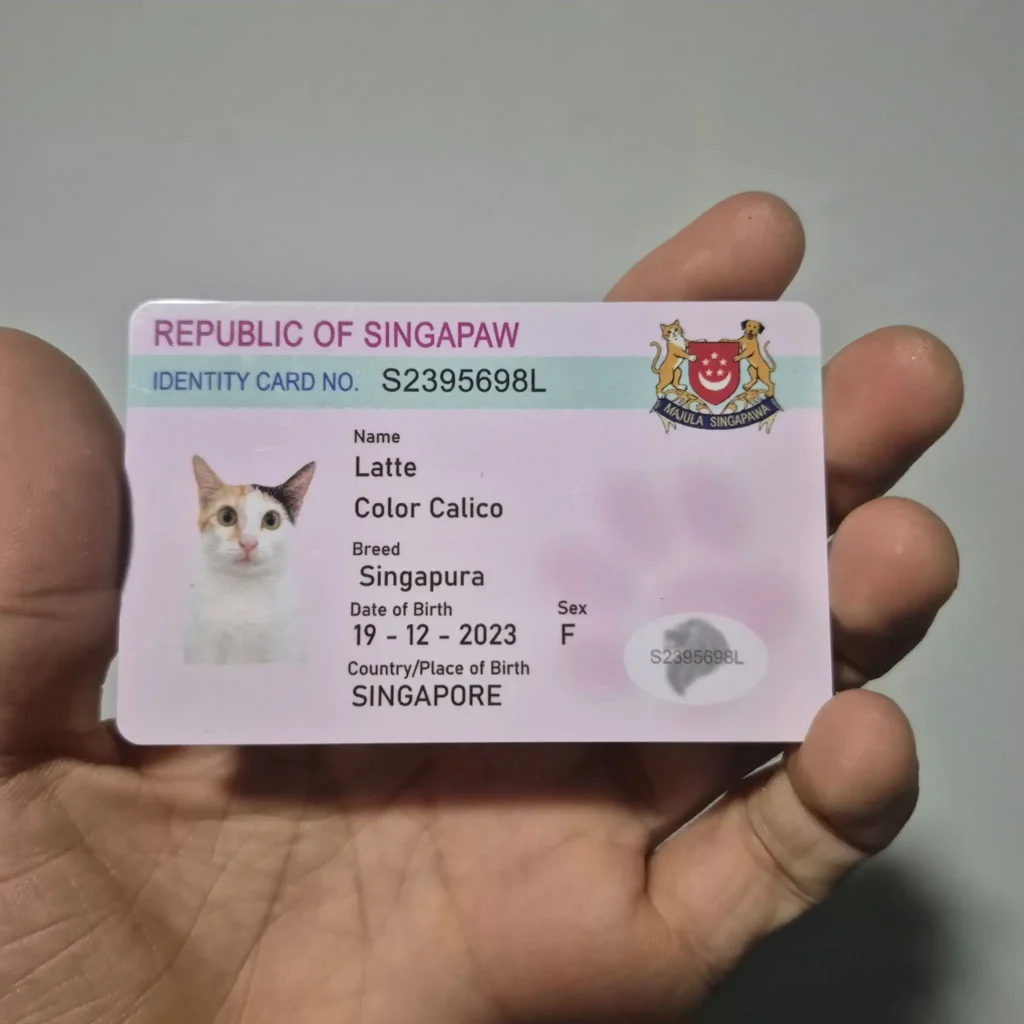
These recreational pet ID cards commonly feature:
- A photograph
- Pet’s name
- Breed
- Date of birth
- Personality traits
- Playful titles
- Custom design elements
The intended purpose is therefore important.
A practical pet ID helps connect an animal with its owner. A personalised pet ID card celebrates the animal through photography, design and meaningful information.
Understanding this distinction helps pet owners choose the right product without expecting one format to perform every function.
Pet ID Card vs Pet Tag: The Core Difference
A traditional pet tag is primarily functional.
It is normally:
- Attached directly to a collar
- Worn by the pet
- Designed for regular use
- Limited to essential information
- Made from a compact and durable material
A personalised pet ID card is primarily recreational or sentimental.
It may be:
- Carried in a wallet
- Displayed at home
- Included in a pet gift set
- Stored in a scrapbook or memory box
- Created as a novelty or memorial item
The difference is not simply about the shape or size of the product.
A pet tag is intended to support practical identification. A pet ID card presents the pet’s identity in a more visual, creative and enjoyable format.
Pet owners exploring the broader uses of these personalised cards can learn more through our Pet ID Card Singapore guide, which covers common applications, printing considerations and keepsake purposes.
Quick Comparison: Practical Tag vs Personalised Card
| Consideration | Pet ID Card | Traditional Pet Tag |
|---|---|---|
| Main purpose | Personalised card or keepsake | Practical identification |
| Typical use | Display, gifting, collecting or memorial use | Attached to the pet’s collar |
| Contact details | Optional | Usually important |
| Photograph | Common | Uncommon |
| Design freedom | High | Limited by size |
| Everyday function | Mainly recreational | Mainly practical |
| Information capacity | Moderate to high | Limited |
| Keepsake value | High | May become sentimental |
| Should it replace a collar tag? | No | Designed for collar-based identification |
Neither format is universally better.
The more useful question is:
What do you want the product to achieve?
A traditional tag is more suitable for practical identification. A personalised pet ID card is more suitable for enjoyment, gifting, display and sentimental value.
Why Traditional Pet Tags Remain Useful
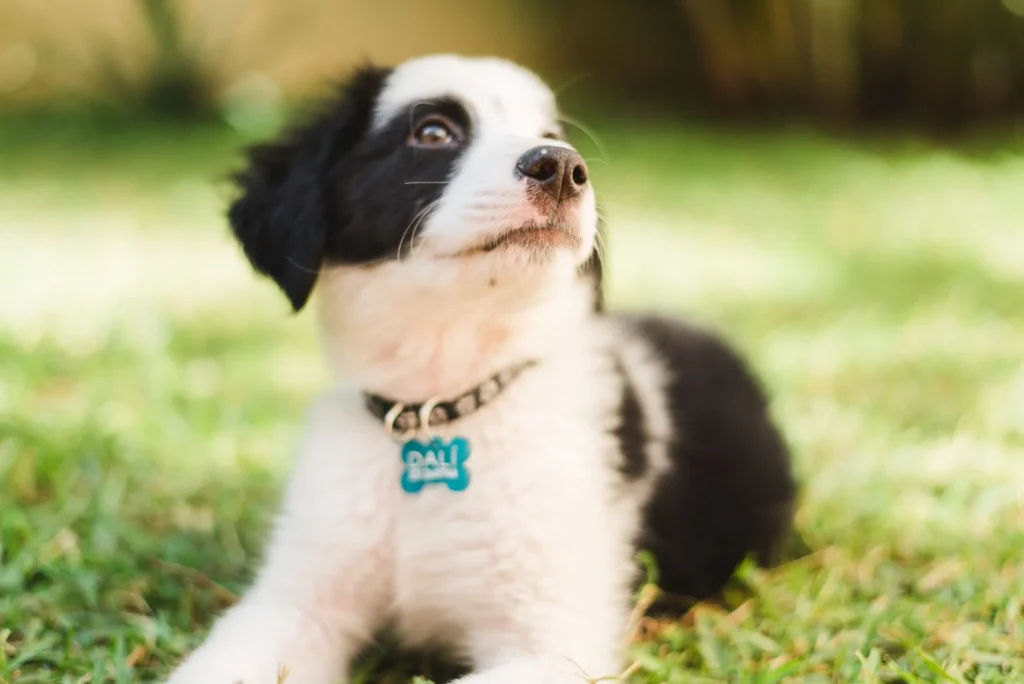
Traditional pet tags are designed to present essential information in a compact format.
Common details may include:
- Pet’s name
- Owner’s telephone number
- Secondary contact number
- Short medical note
- Brief instruction
Because the tag remains attached to the collar, someone who encounters the pet can view the available details directly.
The limited surface area means the design should remain simple. Adding too much text can lead to:
- Small lettering
- Poor readability
- Crowded spacing
- Important details becoming difficult to locate
For practical identification, clarity should normally take priority over decorative detail.
Owners should also ensure that:
- Contact details remain current
- The wording is readable
- The tag is attached securely
- The selected material suits everyday wear
- The tag does not cause unnecessary discomfort
A personalised pet ID card does not perform the same collar-based role and should not be presented as a replacement.
What Makes a Personalised Pet ID Card Different?
A personalised pet ID card is created mainly for the owner rather than for the pet to wear.
Its larger rectangular layout provides more room for photography, personality details and creative styling.
Depending on its purpose, the card may include:
- Pet’s name
- Portrait photograph
- Breed
- Date of birth
- Nickname
- Favourite activity
- Personality traits
- Fun title or role
- Meaningful date
- Decorative design elements
The card may resemble:
- An identity card
- A membership card
- A character profile
- A collectible card
- A novelty licence
- A memorial card
This gives owners more freedom to present their pets in a playful, affectionate or meaningful way.
Rather than functioning as formal identification, the card becomes a compact celebration of the animal’s appearance and personality.
Which Format Offers More Personalisation?
The pet id card vs pet tag difference becomes especially clear when personalisation is considered.
Traditional Pet Tags
A conventional pet tag has limited space.
Its design normally needs to prioritise:
- Essential contact details
- Clear lettering
- Strong contrast
- Compact formatting
- Easy readability
Owners may still be able to select different colours, shapes or finishes, but the practical role of the tag should remain clear.
Personalised Pet ID Cards
A printed pet ID card provides substantially more design space.
It can support:
- Full-colour photographs
- Front-and-back layouts
- Decorative backgrounds
- Custom typography
- Icons and illustrations
- Structured information fields
- Personalised titles
- Several smaller details
This allows the card to feel like a complete profile of the pet rather than a basic contact label.
The design can also be adjusted according to the intended tone.
A novelty card may use bright colours and humorous wording. A gift-focused card may use a cheerful photograph and personalised details. A memorial card may use softer colours and a more restrained presentation.
For more guidance on image selection, typography, colours and spacing, refer to our pet ID card design guide.
Comparing Durability and Everyday Use
Durability should be considered according to how each product will be handled.
Traditional Pet Tags
A collar tag may experience:
- Outdoor exposure
- Moisture
- Scratching
- Constant movement
- Contact with the collar
- Repeated physical wear
Its material and attachment should therefore be suitable for regular use.
The lifespan of the tag may depend on:
- Material quality
- Attachment strength
- Printing or engraving method
- Surface finish
- Exposure to water and abrasion
Personalised Pet ID Cards
A pet ID card is normally handled differently.
It may be:
- Kept inside a wallet
- Placed in a protective sleeve
- Stored in a memory box
- Displayed on a desk
- Carried occasionally
- Included in a personalised gift
Its long-term appearance may depend on:
- Card material
- Print quality
- Surface finish
- Storage conditions
- Frequency of handling
A professionally produced card can remain visually attractive when stored appropriately, but it is not usually intended to withstand the same conditions as an item attached to a pet’s collar.
When Should You Choose a Traditional Pet Tag?
Choose a traditional pet tag when practical identification is the main requirement.
It is generally the better choice when:
- The pet regularly goes outdoors
- Contact details should remain attached to the collar
- Immediate accessibility is important
- Only essential information is needed
- The item must remain with the pet
The traditional tag has a clear practical role.
Its value comes from being visible, readable and physically attached to the animal.
When preparing a tag, owners should avoid making the design too complicated. A concise and legible tag is usually more useful than one containing excessive text.
When Should You Choose a Personalised Pet ID Card?
Choose a personalised pet ID card when the goal is to celebrate the pet through photography and design.
It may be especially suitable when:
- You want a fun customised product
- You are creating a gift for a pet owner
- You want to preserve a favourite photograph
- You enjoy collecting personalised cards
- You want a wallet-sized pet keepsake
- You are creating a memorial item
- You want a compact alternative to a larger photo product
A custom pet ID card also allows owners to showcase details that would not fit on a conventional tag.
These may include personality traits, favourite activities, humorous titles and meaningful dates.
For owners comparing different personalised formats, our guide to the best personalised pet gifts in Singapore explores additional gifting and keepsake ideas.
Can Pet Owners Use Both?
Yes. A traditional pet tag and a personalised pet ID card can complement one another because they perform different roles.
The traditional tag can provide:
- Practical collar-based identification
- Visible contact details
- Everyday functionality
The personalised pet ID card can provide:
- A favourite photograph
- Creative details
- A novelty design
- Gift or display value
- Memorial significance
Using both prevents the owner from expecting one item to perform every possible function.
The pet tag can remain simple and practical, while the card can focus on personality, creativity and sentimental value.
This is often a more sensible approach than treating the two products as direct substitutes.
Choosing the Right Pet ID Format With Confidence

The right pet ID format depends on its intended purpose.
Choose a traditional pet tag when:
- Practical identification is the priority
- Essential contact details must remain with the pet
- The product is intended for everyday collar use
Choose a personalised pet ID card when:
- You want a recreational or novelty product
- A photograph is important
- The card is intended as a gift or keepsake
- Design freedom matters
- You want to preserve the pet’s personality in a compact format
Choose both when:
- Practical identification and personalisation are equally important
- You want the tag to remain functional
- You want the card to remain creative and meaningful
At Print Print, personalised pet ID cards form part of a broader range of custom printing solutions designed for gifting, collecting, display and memorial use.
Owners can explore our pet ID card printing service to create a custom card using their preferred photograph, wording and design style.
Final Thoughts: Choose the Right Format for Its Purpose
The pet id card vs pet tag decision is not really about selecting one universal winner.
A traditional pet tag is a practical product designed to remain attached to the animal and display essential information.
A personalised pet ID card is a recreational and creative product designed mainly for the owner. It provides room for photography, personality details and meaningful design elements that would not fit on a conventional tag.
For many owners, both products can have a place. The traditional tag supports everyday practicality, while the printed card provides a fun and memorable way to celebrate the pet.
To create a personalised pet ID card for gifting, collecting, display or memorial use, contact Print Print for a free, no-obligation quotation. The card can be customised around your preferred photograph, pet details and intended design style.
