


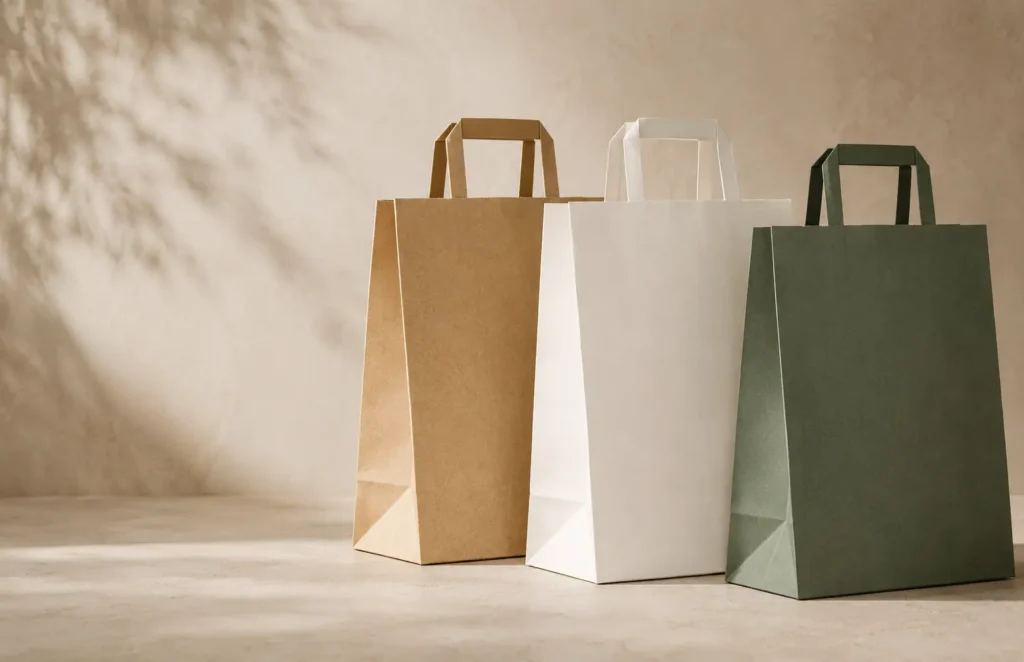
Paper bags are widely used for retail packaging, gifts, product launches and promotional campaigns because they provide a lightweight surface for branding while remaining easy to distribute.
Businesses preparing a custom order can explore our tote bag printing service, where Print Print currently offers paper alongside canvas and non-woven PP bag options. Paper is positioned particularly for retail packaging, gift bags and short-term promotional uses.
This guide explains how paper bag material, GSM, handles and construction affect strength, printing and practical use. For a broader comparison between paper, canvas and non-woven PP, refer to our complete tote bag material guide.
Table of Contents
- What Is Paper Bag Material?
- What Determines Paper Bag Strength?
- How GSM, Handles and Gussets Affect Quality
- How Paper Bags Perform for Custom Printing
- Best Uses for Printed Paper Bags
- Key Advantages and Practical Limitations
- Cost, Quantity and Choosing the Right Paper Bag
- Plan Your Paper Bag Printing with Print Print
- Final Thoughts: Match the Paper Bag to Its Purpose
What Is Paper Bag Material?
Paper bags are produced from paper-based stock that is folded and formed into a bag structure. Depending on the specification, the paper may vary in colour, surface finish, weight, fibre composition and stiffness.
Kraft-style paper is commonly associated with natural brown paper bags, while white and other finished paper stocks may provide a different appearance for retail or gift packaging.
However, the term paper bag material does not describe quality by itself.
Two paper bags can look similar while performing very differently because of differences in:
- paper weight
- fibre and stock quality
- handle construction
- base reinforcement
- gusset design
- bag dimensions
This is why buyers should consider the complete bag rather than choosing only by paper appearance.
Quick Answer
Paper bag strength depends on more than GSM. Paper weight matters, but handles, folds, gussets, base construction, dimensions and expected contents all affect how the finished bag performs.
What Determines Paper Bag Strength?
A heavier sheet can generally provide a more substantial feel, but paper weight should not be treated as a guaranteed carrying-capacity measurement.
The items placed inside the bag create stress in several areas at once.
Paper Body
The paper body needs enough structure for the expected contents. Lightweight promotional items place different demands on the material from books, boxed products or bottles.
Handles
Handle strength depends on both the handle itself and how securely it is attached to the bag.
Different paper bag constructions may use flat paper handles, twisted handles, rope-style handles or other systems. Availability depends on the actual bag specification.
The important consideration is not simply which handle looks best, but whether the attachment can support the intended contents.
Bottom and Gussets
Side or base gussets allow a bag to expand and accommodate wider products.
The bottom of the bag also experiences concentrated load when items are placed inside. For heavier contents, base construction and reinforcement can therefore be just as important as paper weight.
For this reason, businesses ordering bags for books, bottles or boxed merchandise should tell the printer what will actually be carried rather than requesting “thick paper” alone.
How GSM, Handles and Gussets Affect Quality
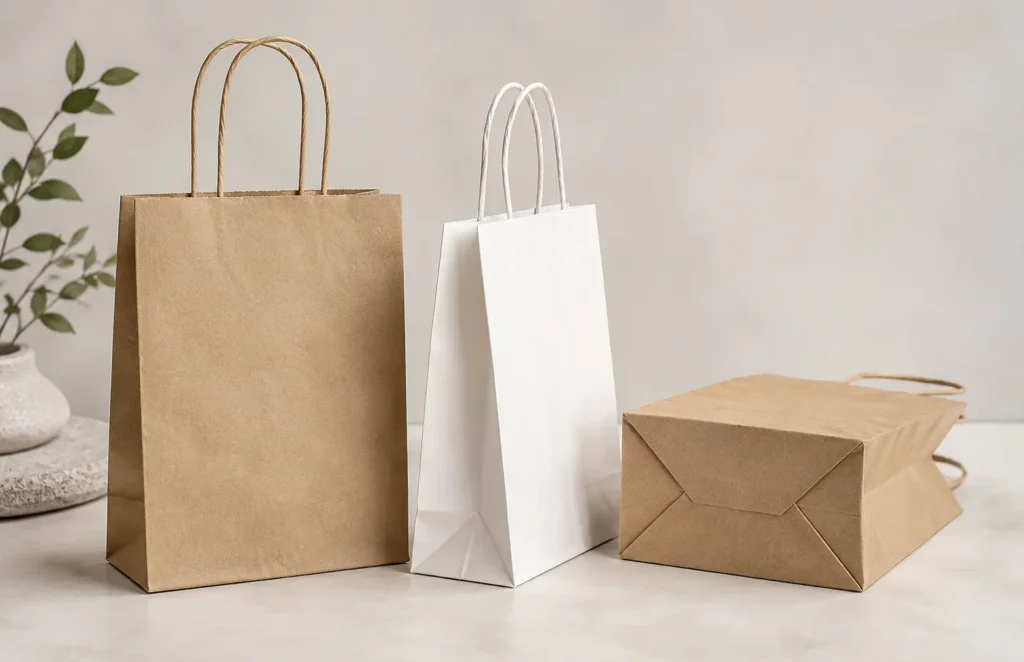
Paper is often described using GSM, or grams per square metre.
A higher GSM means more paper mass per unit area, but it does not directly tell you:
- maximum carrying weight
- tear resistance
- handle strength
- water resistance
- overall bag durability
Paper, non-woven PP and canvas may all use GSM in certain specifications, but their figures should not be compared as if they were equivalent materials.
Our tote bag thickness guide explains why material weight needs to be interpreted in context.
When assessing a paper bag, consider the specification as a system:
| Factor | Why It Matters |
|---|---|
| Paper weight | Influences structure and feel |
| Bag dimensions | Affect load distribution and usable capacity |
| Handles | Need suitable attachment for expected contents |
| Gussets | Create additional depth for wider products |
| Base construction | Supports contents from below |
| Surface finish | Influences appearance and printing |
If carrying performance is important, reviewing a physical sample may provide more useful information than GSM alone.
How Paper Bags Perform for Custom Printing
One advantage of paper bag material is its suitability for visible branding.
Compared with heavily textured fabrics, many paper surfaces can reproduce clean logos, lettering and graphic elements effectively. The exact result still depends on the paper stock, surface treatment, bag colour and printing process.
Common artwork may include:
- company logos
- retail branding
- event names
- campaign messages
- simple illustrations
- product or gift branding
Contrast remains important. Dark artwork may appear clearly on lighter paper, while designs printed onto coloured or natural brown stock need to account for the underlying paper colour.
The bag’s physical construction also affects artwork placement.
Avoid positioning critical text directly across:
- folds
- handle attachments
- gussets
- heavily creased areas
The available print area should be confirmed before artwork is finalised.
Our tote bag design guide provides broader guidance on artwork resolution, colour preparation and safe print areas.
Best Uses for Printed Paper Bags
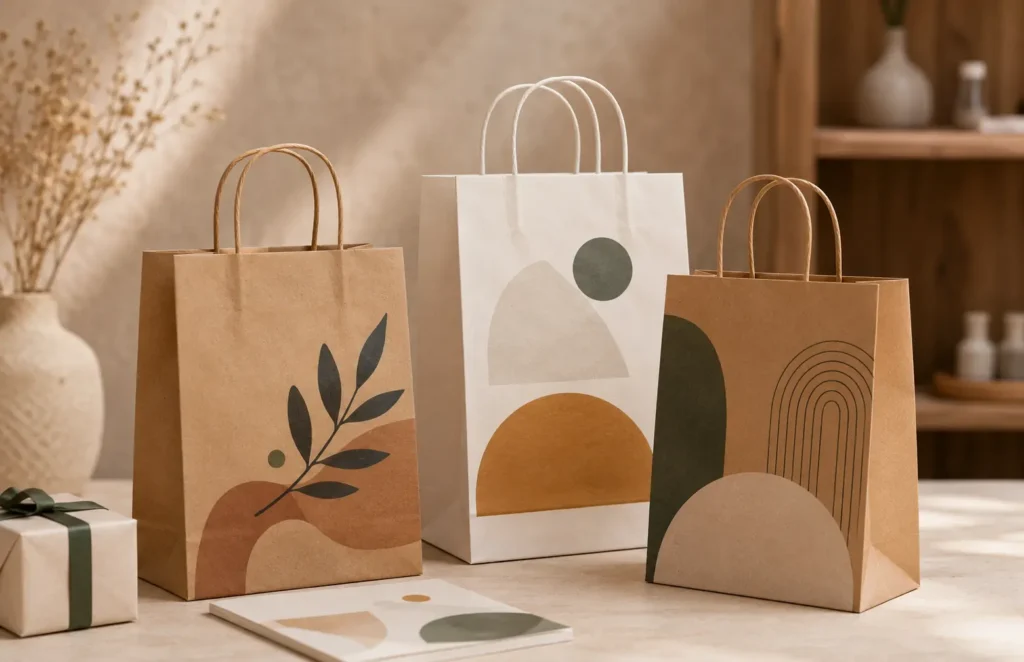
Paper bags are particularly effective when presentation and lightweight packaging matter more than long-term repeated use.
Retail Packaging
Printed paper bags can provide customers with a branded way to carry lightweight purchases while extending the visual identity of the retail experience beyond the shop.
Gift Bags and Corporate Packs
Paper can work well when the bag is part of the presentation of a gift rather than the gift itself.
Examples may include:
- corporate gift packs
- event door gifts
- product launch kits
- appreciation gifts
- lightweight merchandise
Product Launches and Promotions
A branded paper bag can help group brochures, samples or promotional items into one coordinated package.
Events
Paper may also suit selected conferences, launches or registration packs where contents are relatively light and the bag is not expected to withstand prolonged outdoor use.
For campaigns where repeated use and heavier contents are more important, our canvas tote bag material guide explains a more durable alternative. For high-volume lightweight distribution, the non-woven tote bag material guide covers another option.
Key Advantages and Practical Limitations
Advantages
Paper bags can offer:
- a clean surface for branding
- lightweight handling and distribution
- strong suitability for retail and gift presentation
- different visual finishes and paper tones
- convenient packing for short-term campaigns
They can also create a presentation style that feels more appropriate for retail packaging than a fabric tote.
Limitations
Paper does have practical limits.
It can be more vulnerable to:
- moisture
- tearing around heavily loaded areas
- repeated folding
- excessive weight
- prolonged rough handling
A paper bag that performs well for clothing, brochures or a gift box may not automatically be suitable for several books or heavy bottles.
Environmental claims should also be made carefully. A paper-based product is not automatically sustainable simply because it is paper. Coatings, laminates, handles, inks and disposal conditions can affect recyclability.
Where FSC claims are important, the certification needs to be supported through the relevant chain of custody. FSC explains that its chain-of-custody system verifies certified forest-based material as it moves through processing and distribution.
For marketing copy, it is therefore safer to describe the actual material or certification rather than making broad unsupported “eco-friendly” claims.
Cost, Quantity and Choosing the Right Paper Bag
Paper bag pricing can vary according to:
- paper specification
- dimensions
- handle type
- gusset construction
- colour
- artwork
- print size
- number of print colours
- quantity
- production timeline
Before requesting a quotation, confirm three things first:
- What will the bag carry?
- Brochures and clothing create different requirements from books, bottles or boxed products.
- How many bags are actually required?
- Large quantities may lower unit pricing, but unused stock still creates cost and storage requirements.
- What presentation does the campaign require?
- A simple promotional bag does not necessarily need the same specification as premium retail packaging.
For budgeting considerations, our tote bag printing cost guide explains how material, print requirements and quantity interact. If the bags are needed for an event or launch date, our tote bag printing planning guide also covers quantity and timeline planning.
Plan Your Paper Bag Printing with Print Print
 Choosing the right paper bag involves balancing material, construction, artwork, quantity and what the bag will actually carry.
At Print Print, businesses, schools, event organisers and individuals can coordinate branded bags with other products through our custom printing services.
Print Print currently offers paper as one of its custom bag options alongside canvas and non-woven PP, with paper suited particularly to retail packaging, gift bags and shorter promotional campaigns.
Explore our tote bag printing service, or WhatsApp Print Print with your artwork, required quantity, intended contents and delivery date for practical production guidance.
Final Thoughts: Match the Paper Bag to Its Purpose
The best paper bag material is not simply the thickest paper available.
A reliable specification considers:
- paper weight
- handles
- gussets
- base construction
- expected contents
- printing requirements
- intended duration of use
Paper bags can be particularly effective for retail packaging, gift presentation, launches and promotional projects where visual branding and convenient distribution are priorities.
For heavier contents or repeated long-term use, another material may provide better value. The right decision comes from matching the bag to the project rather than assuming one material works for every application.
For recommendations based on your products, quantity and campaign requirements, contact us for a consultation on custom paper bag printing for your retail, event or promotional project.
